OpenZhenZhen AI プロンプトギャラリー · gpt-image-2.5 · image
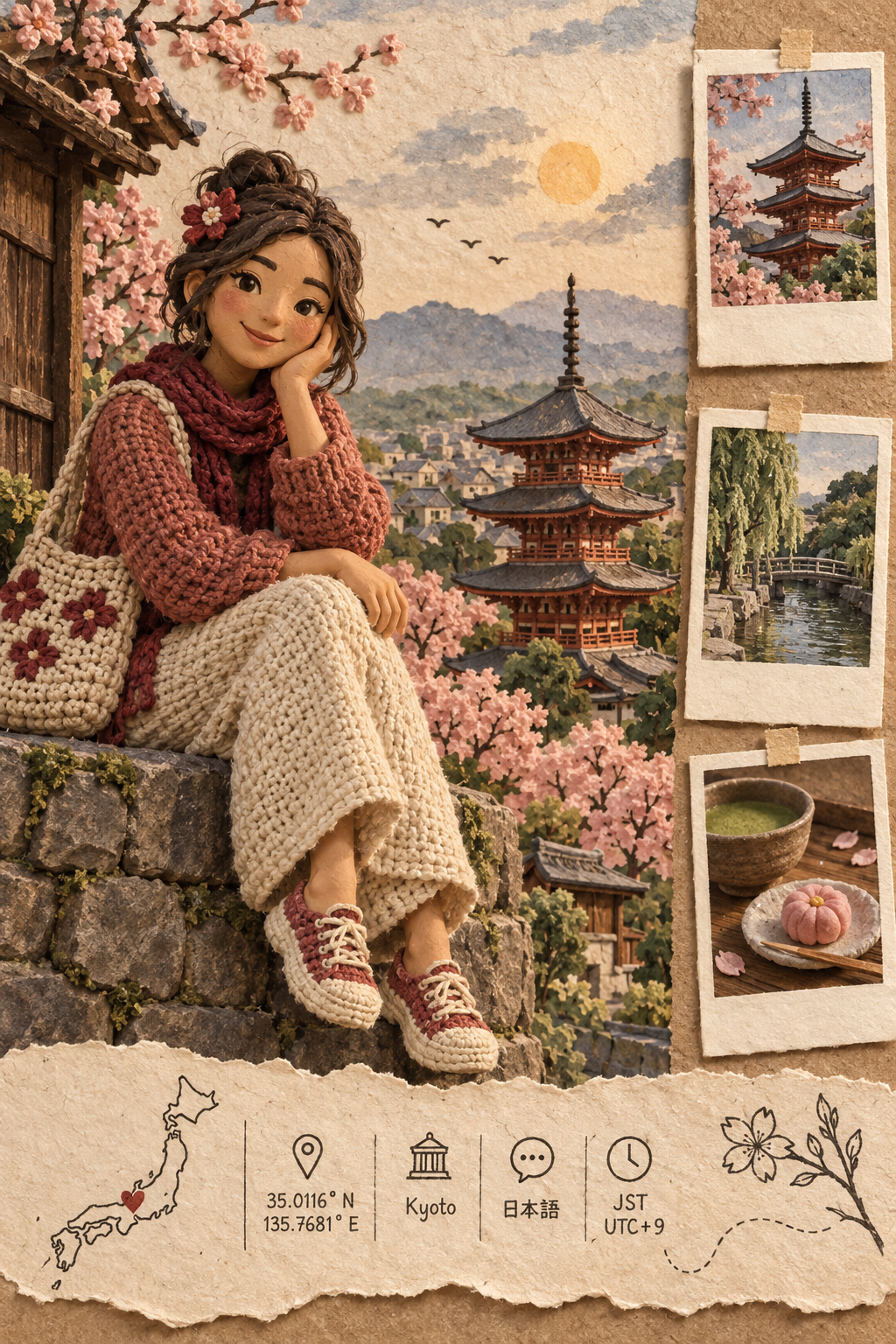
手作り立体模型風デスティネーション旅行ポスター
Handmade 3D Model Style Destination Travel Poster
「手作り立体模型風デスティネーション旅行ポスター」は gpt-image-2.5 を使用した作品です。OpenZhenZhen で元のプロンプトと生成例を確認し、創作の参考にできます。
プロンプト
中国語プロンプト
为 Kyoto, Japan 创作一张垂直 2:3 Instagram 旅行海报,属于可收藏的手工旅行艺术系列。图像任何位置都不要放标题、标题行、标语或说明文字。整张图都应像实体制作的立体模型,使用哑光橡皮泥、钩针与纱线、分层纸艺、有纹理的手工纸和细微刺绣;不能像数字渲染。核心主体是一名明确为成年女性的旅行者,占画面的 35–40%,坐在石墙或符合当地文化的窗台上,面向观者并带温暖微笑。她的面部和双手使用带指纹与手工瑕疵的哑光橡皮泥表现。她的服装完全由钩针和纱线构成,采用 Kyoto, Japan 的纺织调色板,包括钩针鞋、编织包和仅一件文化配饰;她应是当代旅行者,不是服装化的文化漫画。将一个 Kyoto, Japan 最具代表性的纸艺景观作为次要焦点,只包含 2–3 elements:撕切纸张地形、纸质建筑和植被、可见纤维与分层阴影。天空使用手工纸上的水墨/山水画风格墨洗与水彩,配柔和笔触云、低调光线、极少鸟类和宽阔留白。右侧加入 exactly 3 张竖向拍立得,占画面不超过 18–20%,分别展示一个地标、一处自然景观和一种当地食物;全部采用相同手工材料,绝非摄影,使用奶油色边框、毛边和极少和纸胶带。底部加入撕裂奶油色纸张信息条,仅包含手绘轮廓地图与心形标记、坐标、首都、语言和时区,并配紧凑手绘墨水图标;不要段落或标语。涂鸦不超过 3–4 个,从植物图案、指南针、虚线路线、微型建筑草图、一个地区符号、护照印章或标注 Kyoto, Japan 的牛皮纸行李牌中克制选择。视线流程为旅行者 → 景观 → 拍立得 → 信息条。使用奶油色、牛皮纸棕、一种主导的 Kyoto, Japan 强调色、柔和绿色和日晒褪色土色组成紧凑调色板,强调色不超过 2 accent colors。用温暖黄金时段立体模型光照明,让阴影显露纸张厚度、纱线环、橡皮泥指纹和撕裂纤维。避免光亮 CGI、3D 渲染感、写实人物或摄影、任何标题/标题行/标语/多余文字、重复地标、超过一件文化配饰或符号、错误地图、难以辨认的信息面板和杂乱。
英語プロンプト
Create a vertical 2:3 Instagram travel poster for Kyoto, Japan, part of a collectible handcrafted travel-art series. Do not place any title, headline, slogan or caption anywhere in the image. Make the entire image read as a physically made diorama using matte plasticine clay, crochet and yarn, layered papercraft, textured handmade paper and subtle embroidery; it must not look digitally rendered. The hero is one clearly adult female traveler occupying 35–40% of the frame, seated on a stone wall or culturally fitting ledge, facing the viewer with a warm smile. Render her face and hands as matte plasticine with fingerprints and handcrafted imperfections. Dress her entirely in crochet and yarn using Kyoto, Japan's textile palette, including crochet shoes, a woven bag and one cultural accessory only; keep her a contemporary traveler rather than a costume caricature. Show one single most-iconic Kyoto, Japan papercraft landscape as the secondary focal point, limited to 2–3 elements: torn or cut-paper terrain, paper architecture and vegetation, visible fibers and layered shadows. Paint the sky in sumi-e or shan-shui ink-wash and watercolor on handmade paper, with soft brush clouds, muted light, minimal birds and generous negative space. Along the right side, include exactly 3 vertical Polaroids occupying no more than 18–20% of the frame: one landmark, one natural landscape and one local food scene, all made from the same handcrafted materials and never photographic, with cream frames, deckled edges and minimal washi tape. At the bottom, add a torn cream-paper information strip containing only a hand-drawn outline map with a heart marker, coordinates, capital, language and time zone, plus compact hand-inked icons; no paragraphs or slogans. Add no more than 3–4 restrained doodles chosen from a botanical motif, compass, dashed route, tiny architecture sketch, one regional symbol, passport stamp or kraft luggage tag labeled Kyoto, Japan. Guide the eye from traveler to landscape to Polaroids to information strip. Use one tight palette of cream, kraft brown, one dominant Kyoto, Japan accent hue, muted green and sun-faded earth tones, with no more than 2 accent colors. Light the diorama with warm golden-hour illumination so shadows reveal paper thickness, yarn loops, clay fingerprints and torn fibers. Avoid glossy CGI, 3D-render appearance, photorealistic humans or photography, any title/headline/slogan/excess text, duplicated landmarks, more than one cultural accessory or symbol, an incorrect map, an illegible information panel and clutter.
テーマとスタイル
画像・動画プロンプトをもっと見る · 画像を生成 · 動画を生成 · AI キャンバスで作成
関連作品
- 超精巧3Dコミック風スター收藏ポスター
「超精巧3Dコミック風スター收藏ポスター」は gpt-image-2.5 を使用した作品です。OpenZhenZhen で元のプロンプトと生成例を確認し、創作の参考にできます。
- レトロレーシングポスターのデザインプロンプト
「レトロレーシングポスターのデザインプロンプト」は gpt-image-2.5 を使用した作品です。OpenZhenZhen で元のプロンプトと生成例を確認し、創作の参考にできます。
- タイガービールの温かい港のモジュラーポスター
「タイガービールの温かい港のモジュラーポスター」は gpt-image-2.5 を使用した作品です。OpenZhenZhen で元のプロンプトと生成例を確認し、創作の参考にできます。
- 高密度オーガニック野菜のグラフィックポスター
「高密度オーガニック野菜のグラフィックポスター」は gpt-image-2.5 を使用した作品です。OpenZhenZhen で元のプロンプトと生成例を確認し、創作の参考にできます。
- ミニマルなスイススタイルSF書籍ポスター
「ミニマルなスイススタイルSF書籍ポスター」は gpt-image-2.5 を使用した作品です。OpenZhenZhen で元のプロンプトと生成例を確認し、創作の参考にできます。
- 朝鮮王朝の女性水墨素描から写実的肖像へ
「朝鮮王朝の女性水墨素描から写実的肖像へ」は gpt-image-2.5 を使用した作品です。OpenZhenZhen で元のプロンプトと生成例を確認し、創作の参考にできます。