OpenZhenZhen AI プロンプトギャラリー · gpt-image-2.5 · image
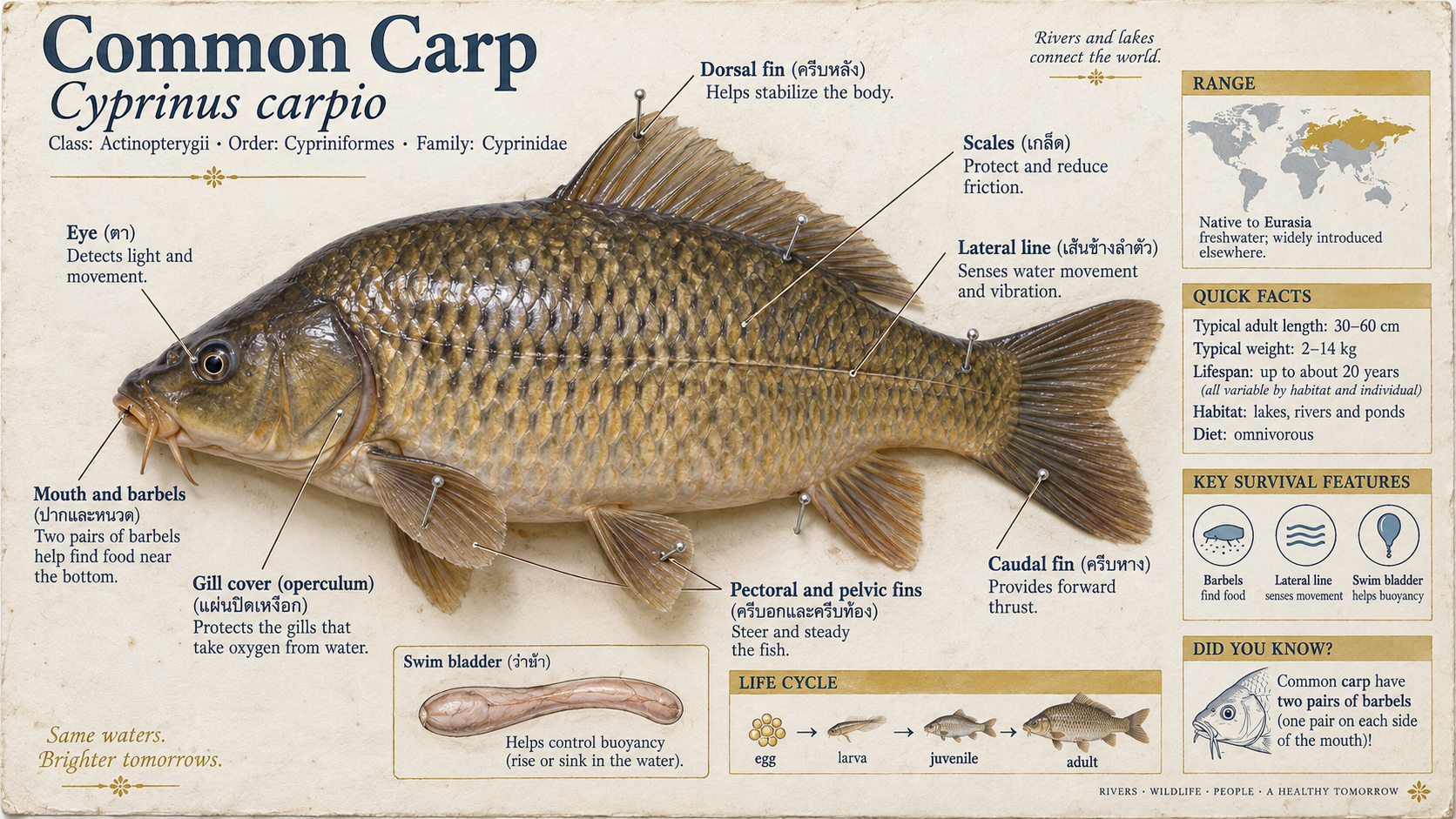
博物館の紙製コイ標本図譜
Museum Atlas of Paper Carp Specimens
「博物館の紙製コイ標本図譜」は gpt-image-2.5 を使用した作品です。OpenZhenZhen で元のプロンプトと生成例を確認し、創作の参考にできます。
プロンプト
中国語プロンプト
创作一张16:9横版博物馆级自然史科普图谱,主题为鲤鱼(Cyprinus carpio,普通鲤鱼)。画面中央是一条真实保存的鱼类标本,实体平放在同一张象牙白纸面上并从正上方俯视;不要做成画面里的照片,也不要表现成游动姿态。标本约占页面60%,鱼体自然舒展,可清晰看到鳞片排列与反光、半透明鳍膜、层次分明的鳃盖、湿润反光的眼睛,以及鱼体边缘轻微厚度。用少量细长银色标本针从背部或鳍基等合适位置固定鱼体;纸面可有细小针孔和轻微压痕,不出现血腥。标本、印刷标注线和文字共享同一张纸的物理平面。围绕鱼体以放射状或分区方式排布6–8条细引导线,配清楚的中英双语名称和适合儿童阅读的简短功能说明:眼 Eye——感知光线和动静;口与触须 Mouth and barbels——两对触须帮助在近底处寻找食物;鳃盖 Gill cover (operculum)——保护从水中获取氧气的鳃;鳞片 Scales——保护鱼体并减少游动阻力;侧线 Lateral line——感知水流与震动;背鳍 Dorsal fin——帮助稳定身体;胸鳍与腹鳍 Pectoral and pelvic fins——转向并保持平衡;尾鳍 Caudal fin——提供向前推进力。加一个简洁的小型印刷示意,标出鱼鳔帮助调节浮力;不要切开或取代实体标本。顶部印上准确标题“鲤鱼 / Common Carp”、斜体学名“Cyprinus carpio”和精简分类“辐鳍鱼纲 Actinopterygii · 鲤形目 Cypriniformes · 鲤科 Cyprinidae”。加入小型世界地图图标,高亮其欧亚原生分布范围,并标注“淡水;在其他地区亦有广泛引入”。在紧凑档案栏写明典型成鱼体长“30–60厘米”、典型体重“2–14千克”、寿命“约可达20年”,并注明随栖息环境及个体而异;栖息环境“湖泊、河流与池塘”;食性“杂食”。加入三个简洁生存技能图标:触须寻找食物、侧线感知水流、鱼鳔调节浮力;附一条儿童友好冷知识“鲤鱼有两对触须”;底部用清晰生命周期条表示“卵 → 仔鱼 → 幼鱼 → 成鱼”。所有信息保持简短、科学逻辑一致且便于儿童浏览。纸张为暖象牙白(#F8F6F0),可见细腻纸纤维,仅带轻微旧化;标注用深灰蓝墨色(#2C3E50),引导线为克制的棕灰色,古铜金点缀(#D4AF37),标本针呈银色金属(#C0C0C0)。标题与斜体拉丁学名采用优雅衬线字形,其余标签清晰易读;整体像博物学家的单页观察记录。正上方博物馆式记录视角,柔和自然顶光、真实细腻的标本投影和有序档案美感。不要额外鱼类、照片插图、水下景物、游动姿态、血腥、杂乱装饰、水印或无关文字。若替换鱼种,必须同步修订对应的解剖结构、分类与全部资料;此处默认内容专属于普通鲤鱼。
英語プロンプト
Create a museum-quality 16:9 landscape natural-history infographic about Common Carp (Cyprinus carpio), the common carp. Show one realistic preserved fish specimen physically lying flat on the same ivory paper sheet, viewed directly from above—not a photograph printed inside the design and not a swimming pose. The specimen occupies about 60% of the page, naturally extended, with visible scale pattern and sheen, translucent fin membranes, layered gill cover, moist reflective eye and subtle body-edge relief. Secure it with a few fine silver specimen pins through appropriate dorsal/fin-base areas; show tiny pinholes and slight paper impressions without gore. All specimen, printed annotation lines and text share the same physical paper plane. Use exactly 6–8 fine leader lines radially around the fish with readable bilingual labels and short child-friendly functions: Eye—light and movement; Mouth and barbels—two pairs of barbels help find food near the bottom; Gill cover (operculum)—protects the gills that take oxygen from water; Scales—protect and reduce friction; Lateral line—senses water movement and vibration; Dorsal fin—helps stabilize the body; Pectoral and pelvic fins—steer and steady; Caudal fin—provides forward thrust. Add a small neat printed inset of the swim bladder, labeled as helping control buoyancy, without replacing or cutting open the physical specimen. At the top print the exact heading “Common Carp”, italic scientific name “Cyprinus carpio”, and concise classification “Class: Actinopterygii · Order: Cypriniformes · Family: Cyprinidae”. Include a small world-map icon highlighting the species' native Eurasian range and note “freshwater; widely introduced elsewhere”. In a compact fact panel list typical adult length “30–60 cm”, typical weight “2–14 kg” and lifespan “up to about 20 years”, clearly marked as variable by habitat and individual; habitat “lakes, rivers and ponds”; diet “omnivorous”. Add three simple survival icons for barbels finding food, lateral-line sensing and swim-bladder buoyancy, one child-friendly fact that common carp have two pairs of barbels, and a clean lifecycle strip “egg → larva → juvenile → adult”. Keep all content concise, scientifically coherent and easy for children to scan. Use warm ivory paper (#F8F6F0), visible fine paper fibers and only slight age wear; dark blue-gray ink (#2C3E50), restrained brown-gray leader lines, antique-gold accents (#D4AF37) and silver pins (#C0C0C0). Use elegant serif lettering for the title and italic Latin name, with clear readable print for labels; arrange everything like a naturalist's field notes on one sheet. Top-down museum documentation, soft natural overhead light, fine realistic specimen shadows and an orderly archival aesthetic. No extra fish, photo inset, underwater scenery, swimming pose, gore, decorative clutter, watermark or unrelated text. If changing the fish species, revise its matching anatomy, taxonomy and fact set together; the defaults here are specific to common carp.
画像・動画プロンプトをもっと見る · 画像を生成 · 動画を生成 · AI キャンバスで作成
関連作品
- 90年代クールトーン仙侠風 翡翠色漢服の人物像
「90年代クールトーン仙侠風 翡翠色漢服の人物像」は gpt-image-2.5 を使用した作品です。OpenZhenZhen で元のプロンプトと生成例を確認し、創作の参考にできます。
- 超精巧3Dコミック風スター收藏ポスター
「超精巧3Dコミック風スター收藏ポスター」は gpt-image-2.5 を使用した作品です。OpenZhenZhen で元のプロンプトと生成例を確認し、創作の参考にできます。
- レトロレーシングポスターのデザインプロンプト
「レトロレーシングポスターのデザインプロンプト」は gpt-image-2.5 を使用した作品です。OpenZhenZhen で元のプロンプトと生成例を確認し、創作の参考にできます。
- ちびキャラチャットスタンプ生成プロンプト
「ちびキャラチャットスタンプ生成プロンプト」は gpt-image-2.5 を使用した作品です。OpenZhenZhen で元のプロンプトと生成例を確認し、創作の参考にできます。
- 子ども向け科学百科ポスター ミツバチを知ろう
「子ども向け科学百科ポスター ミツバチを知ろう」は gpt-image-2.5 を使用した作品です。OpenZhenZhen で元のプロンプトと生成例を確認し、創作の参考にできます。
- ファッションカラーブロックコラージュポートレート写真
「ファッションカラーブロックコラージュポートレート写真」は gpt-image-2.5 を使用した作品です。OpenZhenZhen で元のプロンプトと生成例を確認し、創作の参考にできます。