OpenZhenZhen AI 프롬프트 갤러리 · gpt-image-2.5 · image
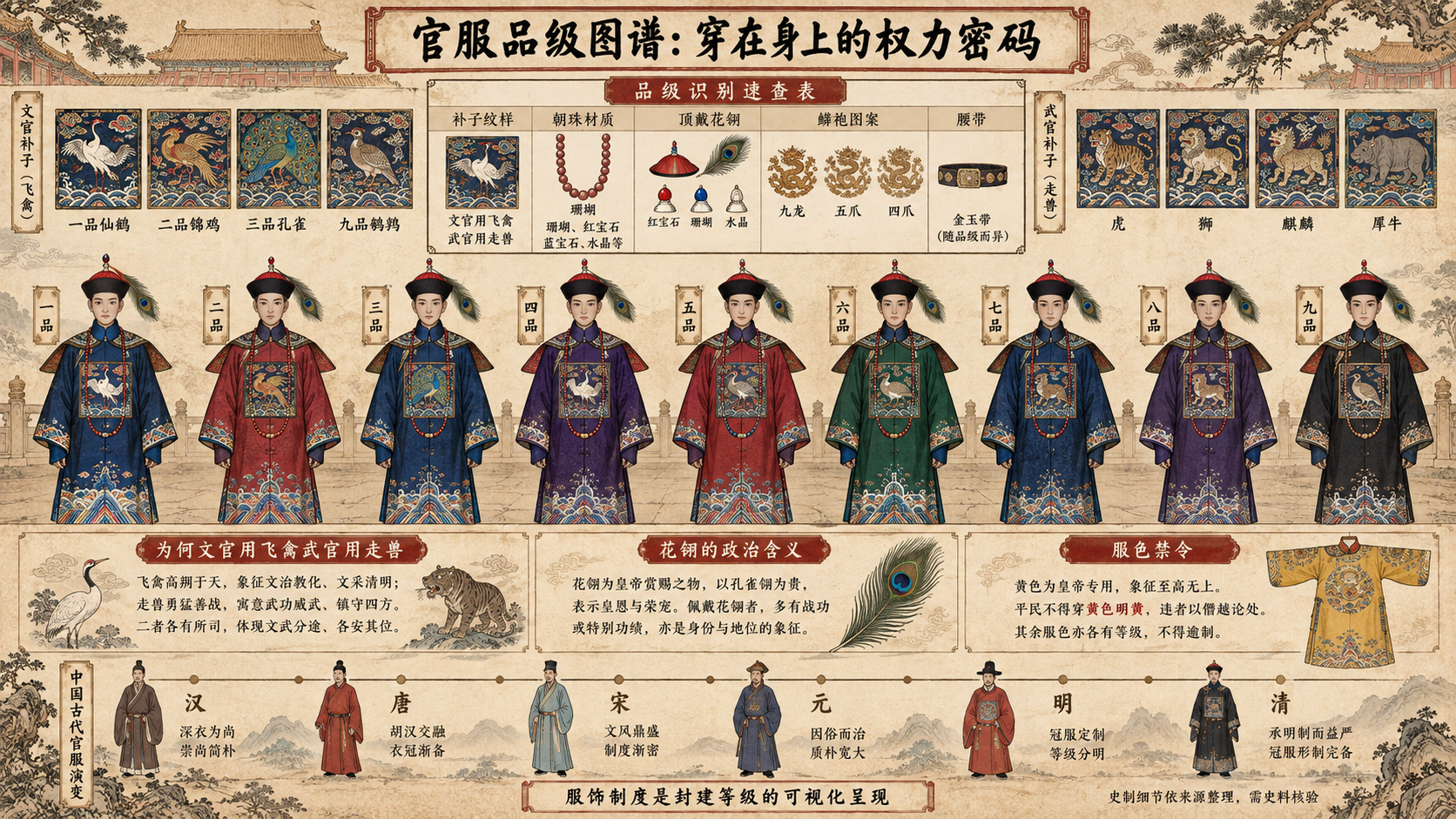
관복 품계 도보: 몸에 걸친 권력의 암호
Official Rank Insignia: The Power Code Worn on the Body
‘관복 품계 도보: 몸에 걸친 권력의 암호’은(는) gpt-image-2.5로 만든 작품입니다. OpenZhenZhen에서 원본 프롬프트와 생성 예시를 살펴보고 새로운 창작에 활용해 보세요.
프롬프트
중국어 프롬프트
设计一张16:9横向中国历史图谱信息图,采用古代典章图式与古籍插画美学。顶部用小篆写出标题“官服品级图谱:穿在身上的权力密码”。中央排列nine generic Qing official figures arranged left to right from first rank to ninth rank,从一品到九品共九位清代官员立绘;面部绑定已配置的固定参考 ref-10a-v1并保持一致,视觉重点放在服饰差异而非脸部。上方或侧方设置表格“品级识别速查表”,五个列名准确写为“补子纹样、朝珠材质、顶戴花翎、蟒袍图案、腰带”,并对比embroidered rank badge, court beads, hat finial and plume, python robe claw-count motif, and belt。按civil officials use bird motifs: first-rank crane, second-rank golden pheasant, third-rank peacock through ninth-rank quail; military officials use beast motifs展示补子纹样,并明确标注来源示例“一品仙鹤、二品锦鸡、三品孔雀、九品鹌鹑”;用放大框呈现刺绣。配合source-described court-bead materials and red gemstone, coral, sapphire and crystal hat-finial color examples展示来源所述朝珠材质和顶戴颜色示例。用简明图示比较蟒袍的九龙、五爪、四爪差异,并明确这些是来源提供的比较内容。下方分成三栏,标题准确写为“为何文官用飞禽武官用走兽”“花翎的政治含义”“服色禁令”,以简短文字呈现来源解释,包括“平民不得穿黄色明黄”这一来源说法。底部设置时间轴,依次标注“汉、唐、宋、元、明、清”,用官服缩略图作概略风格对照,不添加来源未给出的具体史实。整体采用antique canonical-book illustration aesthetic, traditional official-robe colors, fine ink outlines and muted paper texture,保持清楚层级、可读的小号中文、克制的传统配色与充足留白。添加脚注“史制细节依来源整理,需史料核验”。底部准确标注“服饰制度是封建等级的可视化呈现”。要求中文文字尽量准确,但不保证完美生成字形。除九位图表人物外不要增加人物、标志或水印。
영어 프롬프트
Design a 16:9 horizontal Chinese historical infographic with an antique canonical-book illustration look. Place the exact small-seal headline “官服品级图谱:穿在身上的权力密码” at the top. In the center show nine generic Qing official figures arranged left to right from first rank to ninth rank, all nine ranks from first to ninth, with consistent generic faces bound to configured fixed reference ref-10a-v1; emphasize garment details rather than facial variation. Above or beside them, create a compact five-column quick-reference matrix headed “品级识别速查表”, with exact Chinese column labels “补子纹样、朝珠材质、顶戴花翎、蟒袍图案、腰带”, comparing embroidered rank badge, court beads, hat finial and plume, python robe claw-count motif, and belt. Use civil officials use bird motifs: first-rank crane, second-rank golden pheasant, third-rank peacock through ninth-rank quail; military officials use beast motifs and add magnified embroidery insets; label the source examples exactly “一品仙鹤、二品锦鸡、三品孔雀、九品鹌鹑”. Include source-described court-bead and finial examples from source-described court-bead materials and red gemstone, coral, sapphire and crystal hat-finial color examples. Illustrate python robe differences with simple diagrams for 九龙、五爪、四爪, clearly presented as source-described comparison examples. In a lower band, show three short panels: “为何文官用飞禽武官用走兽”, “花翎的政治含义” and “服色禁令”, using concise source-provided explanations, including the yellow-clothing restriction claim. Add a left-to-right timeline labeled 汉、唐、宋、元、明、清 with small costume-style thumbnails, as a broad visual comparison rather than unsupported detailed assertions. Apply antique canonical-book illustration aesthetic, traditional official-robe colors, fine ink outlines and muted paper texture and preserve clear hierarchy, small but legible Chinese text, restrained traditional colors and ample spacing. Retain the source phrase “平民不得穿黄色明黄” only as a source-supplied claim and add the footnote “史制细节依来源整理,需史料核验”. Finish with the exact footer “服饰制度是封建等级的可视化呈现”. Request faithful Chinese text but do not claim perfect text rendering. No extra people beyond the nine chart figures, logos or watermark.
더 많은 이미지·동영상 프롬프트 보기 · 이미지 생성 · 동영상 생성 · AI 캔버스에서 만들기