OpenZhenZhen AI 提示词画廊 · MiniMax H3 · video
男友视角·面试里的太听话缺点
Boyfriend's View: The Downside of Being Too Obedient in Interviews
男友视角·面试里的太听话缺点,使用同名原始提示词配对并提供中英文版本
提示词 / Prompt
中文提示词
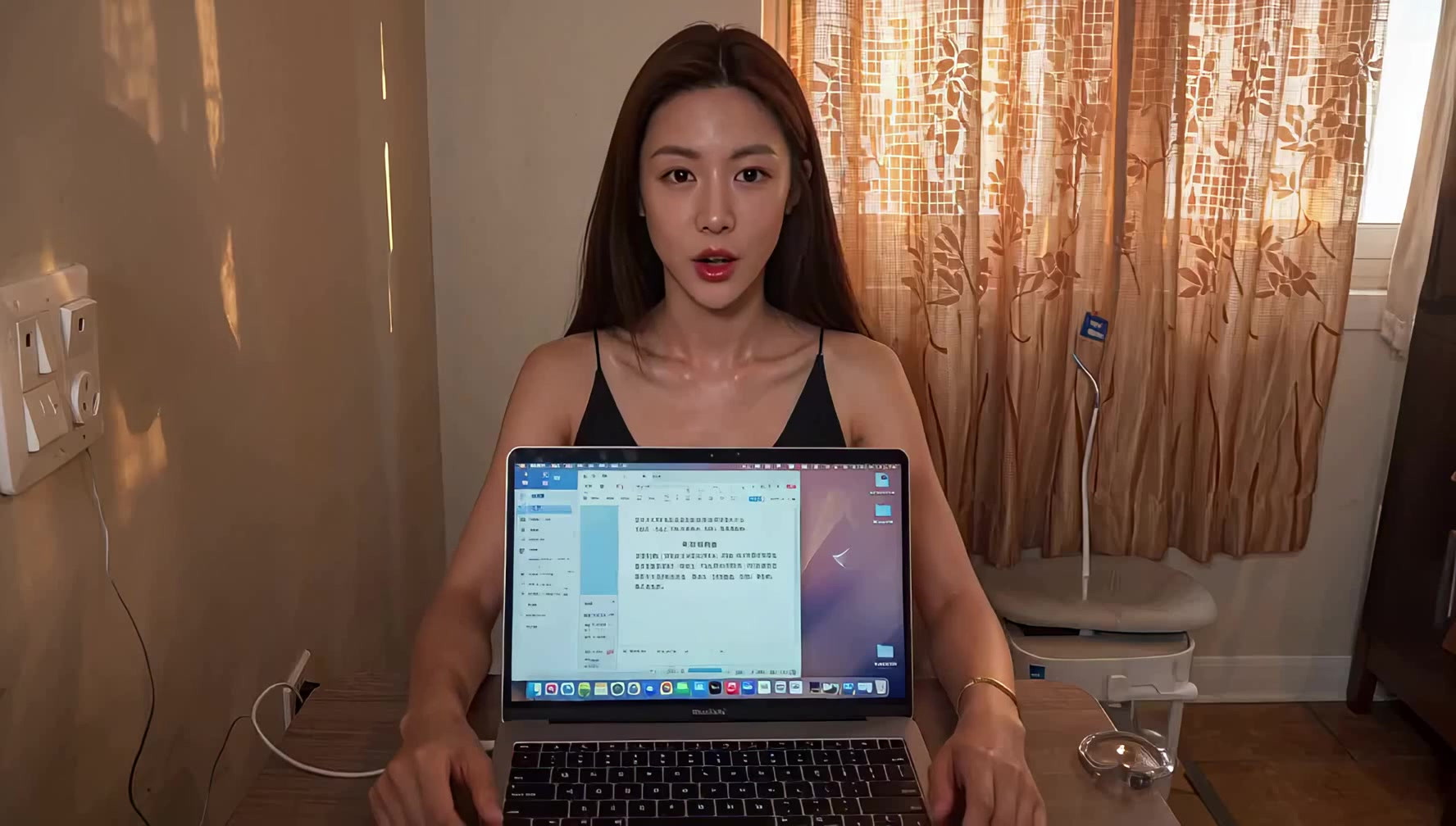
[参考生成] 15秒、16:9、真人写实、男友第一人称眼睛视角,一镜到底。<Subject 1>来自<Picture 1>,始终保留同一成年女性的脸、肤色、深色眼睛及深棕色长发;参考图片只用于身份与明确可见的衣着,不是本片开场帧。自然表演与真实物理,普通话对白按下述原句发声,不出现字幕或文字。 暖色傍晚家庭小书桌,两人等高座椅面对面,男友坐姿眼睛与她平齐。她保持参考脸、长发、黑色细肩带上衣,双手起初在键盘旁,面前一台打开的小笔记本;屏幕朝她,盖子背面朝镜头,顶边低于锁骨,不遮脸,也没有可读文字。镜头始终坐姿,无反打。前3秒她装作正式面试官,望着男友而非电脑,问「说一个你的缺点。」男友画外答「太听你的话。」她立刻说「换一个。」男友下意识先答「好……你看。」中间短停顿表示刚意识到自己又服从了,仍是同一人同一句发言。她本想继续提要求,却听懂笑点,稍看电脑再看他,语气缓和说「这次你决定。」男友直接答「下班。」听完才用一只手把笔记本盖子在画面中一次平稳关合,电脑仍在桌上。最后约2秒她放开盖子,隔着已关的电脑与男友对望,既好笑又认输;不再打开或挪动电脑。对白自然快速但不快进;男友手脸身体不入画。室内声、交替普通话和最终关盖轻响;无多余对白、字幕或笑声。 仅指定人物和物件出现,动作因果与位置连续;男友的脸和身体不入画,只在需要时出现指定的手或鞋。环境声及对白与实际动作同步,无旁白、笑声罐头或额外音乐。
English prompt
subject_definitions: <Subject 1> is the adult woman in <Picture 1>. Preserve her facial identity, long dark-brown hair and black thin-strap top. The reference is for identity and visible wardrobe, not the room, laptop or opening pose. summary: [reference generation] A 15-second, 16:9 live-action male eye-POV comedy. <Subject 1> pretends to interview her boyfriend. His supposed flaw is obeying her too readily; when she orders him to change the answer, he automatically agrees, proving his point. She gives him the next decision. He says work is over, and she actually closes the laptop. <Picture 1> supplies her identity. retention_analysis: <Subject 1> (appears in [Shot 1]): fully_preserved - retain the defined face, hair and top. The small home office and laptop are original scene elements. detailed_description: mpov, first-person perspective pov video, eye level. Natural live-action, warm late-afternoon indoor light, 15 seconds, 16:9. One continuous seated eye-POV conversation with no captions, text overlays or external reverse shot. [Shot 1] I sit directly opposite <Subject 1> at a small desk. We sit on matching-height chairs with our eyes on the same horizontal line. She looks straight ahead into my eyes, not up toward someone standing. Frame her full face and shoulders, with only the upper part of the desk below. An open compact laptop sits in front of her, its lid's back facing me; its top edge remains below her collarbones. Her face is unobstructed. The laptop screen faces her and contains no viewer-readable text. Both of her hands are initially beside the keyboard. My hands are out of view. The camera is my still-seated gaze, never a ceiling view or a view over a standing person's shoulder. In the opening three seconds, she plays a composed interviewer. Looking at me rather than at the screen, <Subject 1> (S1) asks in a clear adult female voice, <d>[Chinese] 说一个你的缺点。</d> From the camera position, I (S2), an adult male present in the room but off screen, answer, <d>[Chinese] 太听你的话。</d> She responds promptly, without first realising the trap: <Subject 1> (S1) says, <d>[Chinese] 换一个。</d> I (S2) automatically agree, <d>[Chinese] 好……你看。</d> The initial agreement is immediate; the small pause before the last two words is me catching myself obeying her. This is one spoken turn, not a second voice or a repeated recording. She has begun to prepare another instruction, then stops when she hears my last two words. One brief glance at the laptop and back to me is enough: do not stretch this into a long silent realisation. Her formal manner eases. <Subject 1> (S1) says, <d>[Chinese] 这次你决定。</d> I (S2) answer directly, <d>[Chinese] 下班。</d> Only after hearing that answer, she places one hand on the laptop lid and lowers it fully onto the base in one smooth, visible action. The computer stays on the same desk, now closed. During the final two seconds, she releases the lid and looks back into my eyes over it, with an amused, slightly conceding expression. The visible closed laptop completes my decision; she does not open it again or slide it away. All speech is brisk natural conversation, not fast-forwarded, and the lid closure has its own physical time. No new line or unrelated gesture follows. My viewpoint remains at her eye level. My hands, face and body stay outside the frame throughout. overall_soundscape: Quiet small-room ambience, clean alternating female and off-screen male Mandarin dialogue, a gentle laptop-lid closing sound after the final male answer. The male voice is physically at the viewing position, not narration. No additional speech or laughter track. non_diegetic_music: N/A
主题与风格
探索更多图片和视频提示词 · 生成图片 · 生成视频 · 在 AI 画布中创作
相关作品
- 最后的园丁:地球重生
制作一部20秒、16:9画幅的写实科幻短片:一台约70厘米高、饱经风霜的小型原创园艺机器人,拥有圆润的旧金属机身、两条机械臂和一只圆形琥珀色眼睛,在被遗弃的地球上恢复生命。全片始终保持恰好一台机器人、一个金属浇水壶、一株幼苗和一株持续生长的植物,并保持机器人的比例及花朵位置一致。场景统一为龟裂干旱土地、毫无生机的土壤、尘雾和远处废墟。采用电影级构图、可触感的陈旧金属、真实植物生长、温暖金色时刻摄影和尘土氛围。时间线:0–3秒,低机位跟拍机器人独自行走,脚下干裂土地前方冒出一株微小绿苗;它停在幼苗旁,全程不剪辑。3–6秒,切镜后机器人跪下,用浇水壶把最后一滴水倒在土壤上,周围土地明显变湿。6–9
- 圣家堂环绕镜头
生成一段20秒、16:9画幅的电影感建筑视频。晴朗日光下,摄影机围绕圣家堂平滑连续地进行360度环绕运动,始终让教堂居中且清晰可辨;随着视角变化,展现其华丽塔楼、雕塑立面和精细建筑细节。保持地平线稳定、尺度一致、视差自然、石材纹理真实,并确保整个运动过程中的光照连贯。采用宽幅建立镜头,逐步展示建筑的多个侧面,运镜流畅且具有专业电影质感;不要剪辑,前景不要出现人物,不要文字或标志,也不要依赖音频呈现信息。
- 小径上的骏马由步行转为疾驰
生成一段20秒、16:9的电影感野生动物风格镜头:一匹马沿着自然土路小径前进。前10秒,马以稳定速度平静行走,清晰呈现完整身体,并展示真实的蹄部落点。约在中点时,马平顺加速,随后在剩余10秒沿同一条小径充满活力地疾驰。摄像机保持一致的侧后方跟拍角度,让马始终成为主体。使用自然日光、稳定曝光、真实的身体结构与运动,蹄部扬起轻微尘土,并呈现细致的户外环境。全程保持空间和时间连续性,不要剪辑、额外动物、人物、文字、标志或音频。
- 马匹小跑后饮水
MiniMax H3 视频生成规格。时长:严格 20 秒。画幅:16:9。制作一个写实的电影感场景:一间整洁、自然采光的马厩内,一匹健康的马围绕马厩持续小跑,清晰呈现有节奏的马蹄声视觉节拍和自然身体运动。画面中段,马逐渐减速,在饮水槽旁完全停下,低头开始饮水。保持连贯统一的镜头与轻柔跟拍,马匹解剖结构稳定,光线一致,环境细节自然。结尾让马平静地饮水;不要剪辑、文字、标志、品牌、源视频或音频输入。
- 狗狗玩球后躺下
生成一段时长20秒、画幅比例16:9的视频。一只友善的狗在室内铺有地毯的地面上积极玩球,用鼻子推动、用爪子拍球,并短暂追逐球。视频中段,狗突然停下,放低身体,平静地躺在球旁边的地毯上。使用清晰连续的镜头,呈现自然可信的犬类动作、稳定构图、柔和室内光线和真实纹理。按时间顺序展示:先玩球,随后躺下。不添加文字、标志或人物,也不需要源视频或音频输入。
- 小鸟落地飞行
生成一个时长20秒、画幅比例16:9的视频。一只小鸟平静地停在自然环境中的树枝上,先保持片刻静止,然后突然从树枝起飞,以流畅且清晰可见的动作向下飞行,并降落在树下的地面上。始终让小鸟及其运动保持在画面中,翅膀动作真实,光线自然,构图稳定,采用连续镜头。结尾时小鸟站在地面上。不要使用或要求任何源视频或音频作为输入。