OpenZhenZhen AI 提示词画廊 · Claude Opus 5.5 · video
Post-Biological Consciousness Experience
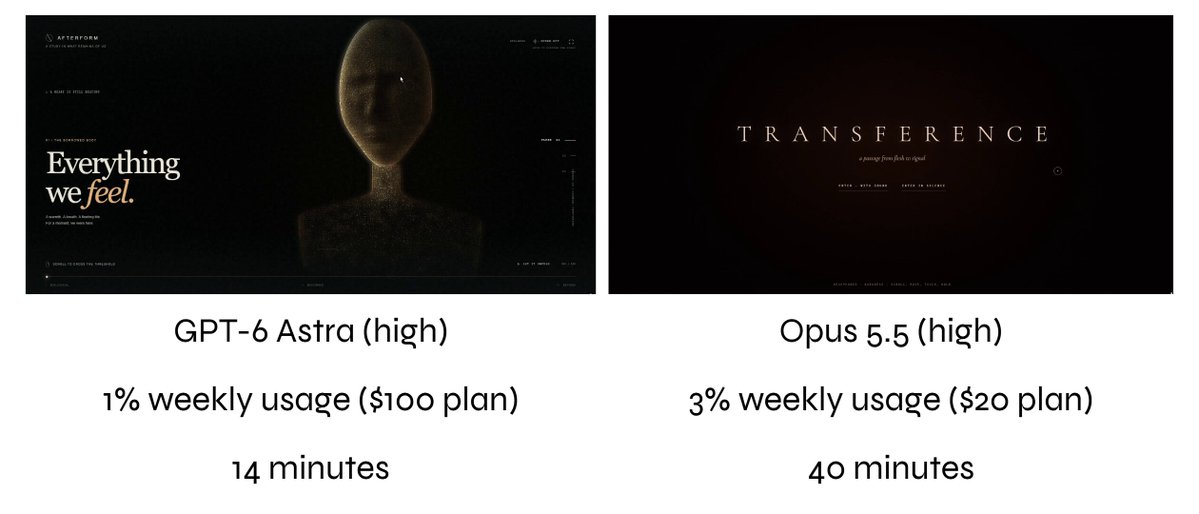
Creator ran the exact same long prompt on GPT-6 Astra and Opus 5.5 to build an interactive visual experience about human consciousness transferring into machines; Opus 5.5 produced a much longer, more cinematic result.
提示词 / Prompt
English prompt
I want you to create an immersive, artistic, visually stunning interactive experience - not a basic webpage, not a simple CSS layout, and not just text with decorative effects. The theme is the transformation of humanity from present-day biological existence into a near-future world where human consciousness is transferred into devices, artificial vessels, or digital environments. IMPORTANT: This must feel like a visual experience or digital art piece, not a standard website. Avoid generic sections, cards, simple hero layouts, basic gradients, or a “landing page” look. I want something that feels cinematic, atmospheric, emotional, and unforgettable. Build it as a single self-contained HTML file with all CSS and JavaScript included. The final result should be polished and visually impressive. Creative direction: - The experience should show a clear visual progression: 1. Present-day human life 2. Transition / transformation 3. Post-biological / uploaded consciousness future - The journey should feel seamless, like moving through phases of existence. - The visuals should communicate emotion, identity, memory, mortality, transcendence, and the blurring of flesh and machine. - The experience should feel like a fusion of sci-fi cinema, interactive digital art, and a futuristic museum installation. Visual requirements: - Full-screen immersive presentation - Rich atmosphere, lighting, glow, depth, and motion - Layered scenes with smooth transitions between phases - Abstract but beautiful symbolism: neural patterns, dissolving bodies, memory fragments, flowing data, holographic structures, particles, light trails, synthetic forms, digital architectures - Elegant typography used sparingly and meaningfully - Strong visual storytelling even without much text - High-end aesthetic: sophisticated, intentional, and artistic Interaction requirements: - The user should feel like they are moving through a transformation, not just scrolling a page - Add meaningful interactivity: scrolling, mouse movement, hover behavior, scene transitions, or subtle input-based reactions - The transition from one state to another should feel dramatic and emotionally powerful - Every scene should feel alive and reactive Tone: - Poetic - Haunting - Futuristic - Philosophical - Beautiful but slightly unsettling - Emotional rather than corporate Technical guidance: - Use advanced front-end techniques to make it visually impressive - If helpful, use canvas, SVG, WebGL, or Three.js-style visual thinking - Smooth animations are extremely important - Prioritize visual cohesion and atmosphere over UI complexity - Keep performance reasonably optimized, but do not sacrifice the experience by making it too plain What to avoid: - Generic webpage design - Boring section-by-section layout - Random disconnected animations - Plain CSS-only “pretty” styling without deeper visual direction - Overly corporate or product-design aesthetics - Too much text explaining the concept instead of showing it visually Goal: I want the final result to feel like a premium interactive short visual journey - something that makes the viewer pause and think, “wow, this actually feels like the passage from human life into digital existence.” Make it feel like an experience, not a page.
主题与风格
探索更多图片和视频提示词 · 生成图片 · 生成视频 · 在 AI 画布中创作
相关作品
- Jelly world Arctic island: Opus vs Astra
The creator compared Claude Opus 5.5 and ChatGPT-6 Astra on the same detailed prompt to build an interactive Arctic diorama in a single HTML file with native WebGPU, preferring Opus's visuals and colors.
- OpenAI agent dots animation: Opus vs GPT-6.1
The creator compared GPT-6.1 Sol Max and Opus 5.5 by making a short animation explaining how OpenAI agents work, from a simple prompt that was not published.
- Animated website from a single image: Opus vs GPT-6.1
The creator compared Claude Opus 5.5 and GPT-6.1 Sol generating animated websites from a single image, using Higgsfield MCP access for the animation, noting Opus took longer but produced more detailed results. 原作需要参考素材;请自行准备图片、视频、音频、文档或代码库等输入。
- Jelly effect model comparison
Four AI models (Mistral Large v4, Kimi K3, GPT 6.1 Sol, Claude Opus 5.5) were each asked to recreate the famous jelly effect, with results compared in a video.
- Opus vs Astra diorama comparison (Blender)
原作需要参考素材;请自行准备图片、视频、音频、文档或代码库等输入。
- Pachinko effect: Opus 5.5 version
原作者未提供提示词,可直接把视频发给 Claude Opus/Sonnet 5.5 或者以上版本作为参考视频,可直接生成同样风格。